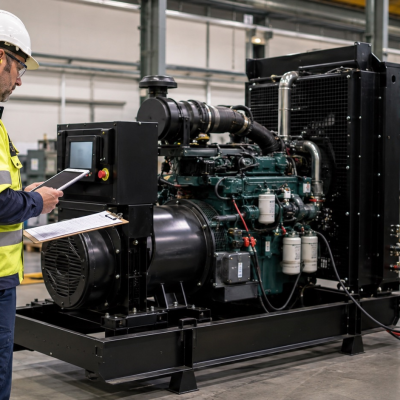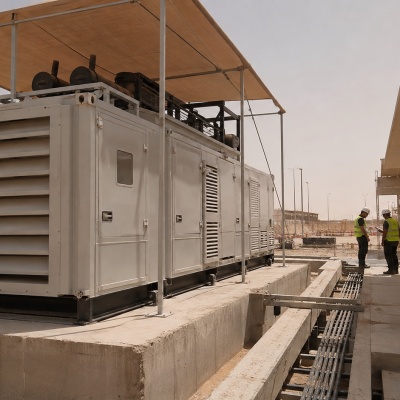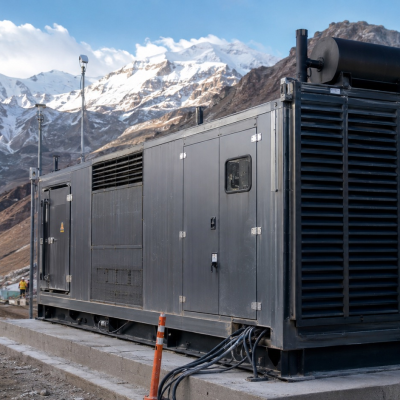


Two quotations can both say 500 kVA and still describe equipment with different usable output, operating life, noise, protection and service scope. Price comparison becomes meaningful only after the technical and commercial boundaries are normalised.
First confirm what 500 kVA means
Check whether 500 kVA is standby or prime power, at what power factor, voltage, frequency, altitude and ambient temperature, and according to which rating definition. At 0.8 power factor, 500 kVA corresponds to 400 kW, but that does not guarantee 400 kW is continuously available at a hot or high-altitude site. Ask each supplier to state the site-rated output.
Ten areas that change the quotation
| Comparison point | Questions to ask | Why it changes value |
| Rating basis | Prime or standby? Reference temperature and altitude? | A headline kVA can hide different usable site output |
| Engine | Exact model, speed, fuel system, governing and published rating? | Fuel use, transient response, parts access and duty capability differ |
| Alternator | Exact model, insulation, temperature rise, AVR, excitation and protection? | Affects voltage recovery, thermal margin and non-linear-load performance |
| Radiator | Designed for which ambient temperature and airflow restriction? | A standard radiator may not suit a hot or enclosed installation |
| Controller | Which alarms, shutdowns, communications and event records are included? | Basic auto-start and full remote integration are different scopes |
| Enclosure | Weather rating, material, service access and verified noise condition? | Steel thickness, airflow design and acoustic treatment affect durability and cooling |
| Fuel system | Tank capacity, usable volume, bund, gauge and transfer interface? | Quoted litres do not always equal guaranteed operating hours |
| Switchgear | ATS, breaker, synchronising, protection and load shedding included? | The generator and the complete emergency-power system are not the same price |
| Testing | Load-bank level, duration, witnessed FAT and reports included? | Evidence and test depth reduce project risk but add real work |
| Support | Warranty terms, commissioning, spares and response responsibility? | Low purchase price can exclude the services needed after delivery |
Engine and alternator model numbers matter
A brand name alone is not enough. Different engine models from the same manufacturer may have different emissions configurations, fuel consumption, service intervals and transient capability. Alternators also vary in winding design, excitation system, temperature rise, enclosure protection and suitability for UPS or variable-frequency-drive loads. Require the exact model and data sheet in the offer.
Cooling and canopy design must be evaluated together
A silent enclosure restricts airflow and adds heat around the package. The radiator, fan, intake louvers, discharge path and acoustic materials therefore form one thermal system. If a quote promises both very low noise and high-ambient performance, ask for the measurement condition and design evidence. A single noise number without distance, load and test method is difficult to compare.
Fuel autonomy is not just tank capacity
Operating hours depend on usable fuel volume and the generator’s fuel consumption at the expected load. A 900-litre tank does not automatically mean a fixed number of hours, because consumption changes with load and some tank volume may be unusable. Compare usable capacity, consumption data, bunding, fuel-level alarms, filling arrangement and local fire requirements.
Controls can change the system scope
One quote may include only a local controller and breaker; another may include an ATS, automatic mains-failure logic, synchronising, load sharing, remote monitoring and building-management communication. List the required functions separately so that every supplier prices the same operating sequence.
Testing and documentation are part of the product
Clarify whether the offer includes routine inspection, full-load testing, step-load testing, protection checks, alternator test results, fuel-consumption records, drawings, wiring diagrams, manuals, packing lists and certificates. A witnessed factory acceptance test and a complete document package cost more than a basic run test, but they can prevent expensive surprises on site.
Compare total delivered scope
- Generator set, breaker, batteries, charger, heaters and base tank.
- Canopy or container, exhaust accessories, loose items and installation interfaces.
- ATS or synchronising panel, cables, communications and remote monitoring.
- Packing, inland delivery, sea freight, insurance and destination charges.
- Commissioning, training, warranty start point, spare-parts kit and exclusions.
A simple quotation comparison method
- Create one technical data sheet and send the same revision to every supplier.
- Separate mandatory requirements from optional features.
- Compare exact models, site-rated output and exclusions line by line.
- Request clarification for every blank field; do not assume it is included.
- Evaluate delivered cost, operating fit and support risk before choosing the lowest number.
Ask for a like for like proposal
Send Everyseek your duty, voltage, frequency, site conditions, load profile, enclosure, fuel autonomy, control functions, test scope and delivery term. We can prepare a configuration table that makes the technical scope visible before you compare price.
Publication check
Before posting, confirm that product options, rating definitions, standards, warranty terms and contact links match the final Everyseek offer for the target market.
- Confirm which controller, engine and alternator brands may be named publicly.
- Align the option list with current Everyseek generator-series pages and quotation templates.
- Add links to the 500 kW or nearest relevant product pages only after specifications are checked.
- Do not publish fuel, noise or ambient-performance values without the applicable test conditions.