

Project overview
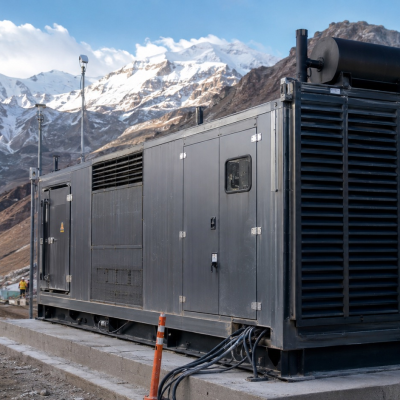
A copper-processing site in southern Peru needed a more resilient power strategy for crushers, conveyors, dewatering pumps, communications and essential camp services. The mine sits at approximately 3,900 metres above sea level, where grid interruptions, long service distances and rapidly changing process loads make a standard catalogue selection risky.
The site had previously depended on a single generator during outages. That arrangement created two problems: there was no practical redundancy during maintenance, and the machine spent long periods far below its efficient operating range when only critical services were running. The new concept therefore focused on usable site output, load response and service continuity rather than the largest nameplate rating.
Engineering challenges
Altitude and temperature
Air density falls as altitude increases. Less air is available for combustion and cooling, so both engine output and alternator thermal performance must be checked against the manufacturers’ altitude and ambient-temperature derating curves. Sea-level kVA cannot be treated as the guaranteed site rating.
Dust and cold starts
Fine mine dust can shorten filter life and restrict radiator airflow. At the same time, overnight temperatures can make starting slower and increase warm-up time. The intake, cooling and starting system must be designed as one package, not as separate accessories added after the generator has been selected.
Large motor load steps
Crushers, pumps and conveyors may draw several times their running current during starting. A set that comfortably carries the steady load can still suffer unacceptable voltage or frequency dip when the largest motor starts. The starting method, sequence and acceptable transient limits therefore had to be included in the load study.
Proposed generator solution
The engineering concept used two 800 kVA-class diesel generator sets connected through an automatic synchronising and load-sharing panel. Final available power at the mine would be confirmed from the selected engine and alternator derating data, then validated during testing. The critical bus was arranged so that one unit could carry defined priority loads, while the second unit could start automatically for a high-load condition, a large motor start or planned maintenance.
| Design area | Recommended configuration | Reason |
| Power architecture | Two parallel 800 kVA-class sets with automatic synchronising | Improves flexibility and allows maintenance without losing all critical power |
| Air system | Two-stage heavy-duty filtration with dust pre-cleaning | Extends filter service intervals in a fine-dust environment |
| Cooling | Radiator selected from site altitude and ambient data | Protects usable output and temperature margin |
| Starting | Jacket-water heater and correctly sized batteries | Supports reliable cold starts after overnight shutdown |
| Fuel | Water separator, accessible drains and day-tank interface | Reduces fuel-contamination risk and simplifies daily checks |
| Controls | Load sharing, priority load logic and remote alarms | Reduces manual switching and gives earlier warning of faults |
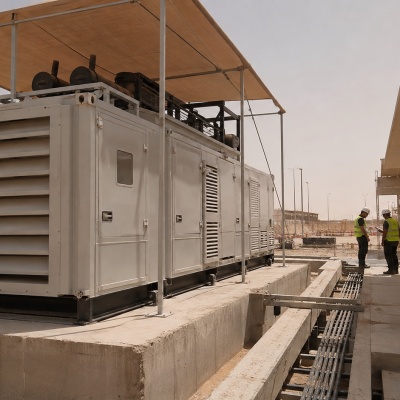
| Enclosure | Weatherproof canopy with service access and dust-conscious ventilation | Balances environmental protection, cooling and maintainability |
Load management strategy
The load list was divided into essential, process and deferrable circuits. Essential pumps, communications and safety systems receive first priority. Process equipment is added in a controlled sequence, and non-critical loads can be delayed if frequency or voltage moves beyond the agreed transient limits. This approach can reduce the need to oversize every component simply to survive one short starting event.
Parallel operation also lets the control system match the number of running engines to the actual demand. When the load is low, one set can carry the bus closer to a healthy operating range. When demand rises, the second set synchronises and shares the load. The operating thresholds and minimum run times must be tuned during commissioning to avoid unnecessary starts.
Testing and site preparation
Before shipment, the project test plan should include rated-load operation, step-load response, protection trips, synchronising, load sharing, emergency stop and remote alarm checks. A resistive-reactive load bank is preferable when motor-heavy behaviour must be represented. The client should also confirm fuel quality, earthing, exhaust routing, cable sizes, ventilation clearances and the foundation before the equipment arrives.
Project outcome
The resulting architecture gives the mine a clearer path to maintain critical power during outages and planned servicing. It also reduces prolonged light-load operation, makes motor-starting priorities explicit and gives the remote maintenance team better visibility of fuel level, temperatures, alarms and running hours. The most important lesson is that high-altitude generator selection starts with site conditions and load behaviour, not a sea-level catalogue rating.
Planning a generator for a remote mine
Send us the site altitude, minimum and maximum ambient temperature, voltage, frequency, load list, largest motor details, starting method, required autonomy and operating duty. Everyseek can use that information to prepare a site-rated generator and control proposal for technical review.
Publication check
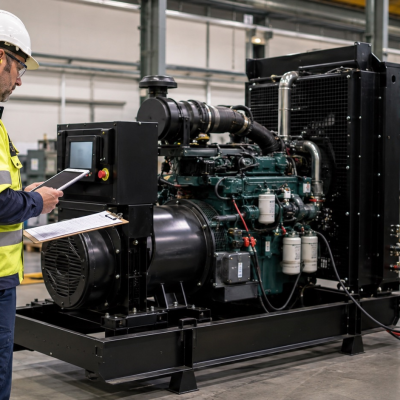
Before presenting this as a completed customer project, replace the scenario details with verified order records and obtain permission for any customer-identifying information. Replace the AI-generated image with approved project photography whenever the post is used as evidence of delivery.
- Confirm the actual client location, site altitude and approved level of anonymity.
- Replace the 800 kVA-class quantity and all technical options with the signed order configuration.
- Add verified FAT and commissioning results; do not publish estimated performance as measured data.
- Confirm permission for site photographs, customer name, project date and any testimonial.